
Exploring the Mysteries of the Egyptian Pyramids: Myths, Prophecies, and Hidden Secrets
Explore the Great Pyramid’s prophetic timeline, hidden underground chambers, and the legendary Hall of Records. Discover theories linking its design to lost ancient technology, Nikola Tesla’s energy speculations, and Edgar Cayce’s visions of Atlantis.
TRAVEL BLOG
Lisa Monk
4/18/202511 min read


The Allure of Ancient Egypt
Ancient Egypt has had me spellbound since the 1980s when I first learned about the exciting discovery of Tutankhamun's tomb in 1922 by British archaeologist Howard Carter and his benefactor Lord Carnarvon in the Valley of the Kings. That single story sparked a lifelong journey of exploration, research, and endless curiosity about the mysteries of this ancient civilisation.
The treasures, hieroglyphs, cosmology, and magnificent architecture captivated me, but my fascination ran deeper than mere curiosity. Something enchanting stirred within my soul, like a long lost memory beginning to surface. The emerging echoes of a forgotten past that resonated so deeply within me in ways that are unexplainable.
This blog contains affiliate links which means I may earn a small commission, at no extra cost to you, if you make a purchase through these links.
Forgotten Secrets of the Giza Plateau
The Giza Plateau is home to the enigmatic Sphinx and three of the most legendary pyramids ever built, the Great Pyramid of Khufu, the Pyramid of Khafre, and the Pyramid of Menkaure. Towering over the desert sands, these awe-inspiring monuments stand as eternal testaments to the advanced engineering, celestial knowledge, and architectural mastery of the ancient Egyptians. Yet, beneath their imposing presence lies an even greater mystery, one that has captivated explorers, historians, and conspiracy theorists for centuries.
The Giza Plateau is primarily composed of limestone, the same material used to construct the pyramids. This limestone is rich in fossilised remains of ancient marine life, dating back millions of years to when the area was underwater. Beneath the surface lies a labyrinth of natural caves, tunnels, and chambers. While some have been explored, others remain untouched, whispering secrets of long forgotten wisdom.
Over the years, the Giza Plateau has been at the center of countless conspiracy theories. Some suggest the pyramids are far older than mainstream Egyptology claims, while others argue they were constructed with the guidance of Anunnaki gods or even extraterrestrial intelligence. Supporters of these theories point to the remarkable precision of the pyramids’ architecture, their mathematical complexity, and their alignment with celestial bodies, questioning whether ancient civilisations could have achieved such engineering feats without advanced or external assistance.
The pyramids' precise orientation with Orion’s Belt, a prominent star constellation, has led researchers to speculate that they may have served astronomical or spiritual purposes. Another theory proposes that quartz crystals embedded within the Great Pyramid’s limestone structure once conducted electromagnetic energy, hinting at advanced ancient technology. Nikola Tesla speculated that such formations might have been capable of collecting and harnessing Earth's natural energy, functioning as a form of wireless power transmission. Engineer Christopher Dunn expanded on this idea in his books, The Giza Power Plant: Technologies of Ancient Egypt and Giza: The Tesla Connection: Acoustical Science and the Harvesting of Clean Energy suggesting that the pyramid’s unique design may have played a role in amplifying and directing this energy, reinforcing the notion that ancient civilisations possessed a deeper understanding of technological principles than previously believed.
Recent technological advancements, including ground-penetrating radar and cosmic-ray muon scans, have revealed voids and potential hidden chambers within the Great Pyramid of Khufu. In 2017, the ScanPyramids Project detected a large, unexplored cavity above the Grand Gallery, known as the Big Void. In 2023, researchers uncovered a hidden corridor near the pyramid’s entrance using muon tomography and endoscopic imaging. While these discoveries continue to fuel speculation about the pyramid’s hidden secrets, their exact purpose remains unknown.
Recent reports in March 2025 using Synthetic Aperture Radar (SAR) technology have hinted at a vast underground network beneath the Pyramids of Giza, possibly stretching over two kilometers. Researches from the Khafre Project claim to have detected deep tunnels, chambers, and colossal structures, suggesting the existence of an ancient subterranean city.
While some theorists speculate this could be a lost temple complex, skeptics dismiss the claims, citing a lack of concrete evidence. Traditional radar and muon tomography scans have not confirmed such massive underground structures, leading to debate over the reliability of SAR technology in detecting formations at extreme depths.
If verified, this discovery could be one of the most significant archaeological breakthroughs in history, potentially reshaping our understanding of ancient Egyptian civilisation. However, excavation challenges and resistance from authorities continue to keep the mystery of what lies beneath the Giza Plateau shrouded in uncertainty.
The Great Sphinx: Ancient Enigma
The Great Sphinx of Giza, an enduring symbol of ancient Egyptian civilisation, has long fascinated historians and tourists alike. Carved from limestone, this monumental statue gazes over the Giza Plateau as a silent guardian of the pyramids and ancient knowledge. While the Sphinx now bears the head of a pharaoh, some scholars speculate that it was originally sculpted with a lion's head, later reshaped by a ruler seeking to immortalise his own likeness. With the body of a lion and the face of a pharaoh, the Sphinx is thought to embody the duality of strength and wisdom, representing the pharaoh's divine role as protector of the land and its people. Its timeless presence continues to evoke mystery, hinting at secrets still buried beneath the sands.
During my practice of entering altered states of consciousness to gain insight and wisdom, I journeyed to the Sphinx and was shown an entranceway between its paws. Stepping through the doorway, I found myself in a long, ethereally lit corridor, its glow guiding me toward one of many underground chambers. Scholars and conspiracy theorists alike have long speculated about the existence of a hidden passage beneath the Sphinx, one that may lead to the pyramids and, perhaps, an entire underground city.
Medieval Arab historians, including Al-Maqrizi a 15th-century Egyptian historian, wrote of hidden passageways beneath the Great Sphinx, leading to subterranean chambers, libraries, or archives said to contain sacred manuscripts from forgotten civilisations. Some texts describe the Sphinx not only as a guardian of the pyramids but as a keeper of ancient wisdom and an entryway to a vast underground network. While mainstream archaeology has yet to confirm such claims, ground-penetrating radar scans have detected anomalies beneath the monument, fueling ongoing speculation that an ancient tunnel may connect the Sphinx to the pyramids. Dr. Karl Stowasser’s book, Medieval Egypt, Ahmed ibn Ali al-Maqrizi, provides insights into Al-Maqrizi’s accounts, offering readers a glimpse into the historical narratives that continue to inspire theories about what may lie beneath this ancient guardian.


The Hall of Records: Fact or Fiction?
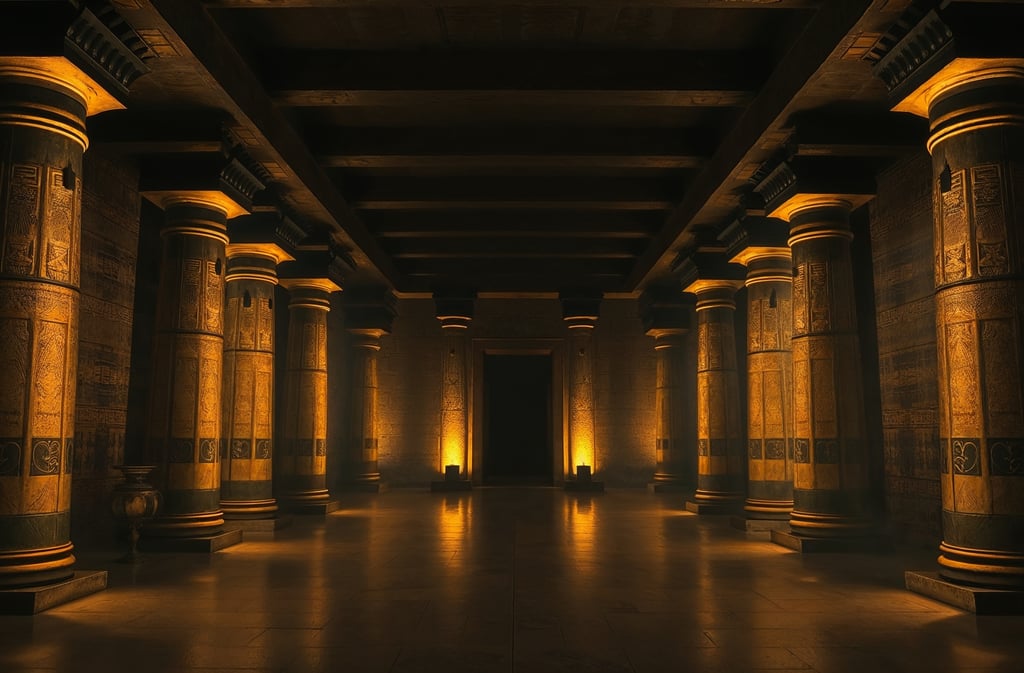
One of the most enduring legends suggests that the Hall of Records, an ancient library said to contain the wisdom of lost civilisations, lies buried beneath the Sphinx or somewhere within the Giza Plateau. While no evidence has been found, some believe the secret history of humanity remains hidden beneath the sands, waiting to be uncovered.
This idea stems largely from the readings of Edgar Cayce, a 20th-century mystic known as the "Sleeping Prophet." Cayce claimed that survivors of Atlantis, fleeing their doomed civilisation, carried their knowledge to Egypt and safeguarded it within a hidden chamber beneath the Sphinx. According to his readings, this hall contained thirty-two tablets chronicling the history of Atlantis, along with records of humanity’s earliest spiritual teachings. Cayce predicted that the Hall of Records would be discovered in the late 20th century, but despite ground-penetrating radar scans detecting anomalies beneath the Sphinx, no definitive evidence has surfaced. Still, his followers continue to believe that the chamber remains sealed, awaiting the right moment, or the right person, to unlock its secrets.
While the Hall of Records is often considered a physical archive of lost knowledge, the Hall of Amenti is a more metaphysical concept, rooted in ancient Egyptian and esoteric traditions. The Hall of Amenti is said to exist beyond the physical realm, serving as a gateway to higher consciousness and spiritual enlightenment. This idea is closely linked to The Emerald Tablets of Thoth the Atlanean, a collection of mystical writings attributed to Thoth, an Atlantean priest-king who escaped the destruction of Atlantis and brought his knowledge to Egypt. According to legend, Thoth inscribed these tablets with sacred knowledge, detailing the secrets of immortality, cosmic laws, and the mysteries of existence. Some interpretations suggest that the Hall of Amenti is where enlightened souls travel to access divine wisdom, transcending the limitations of the material world.
Whether hidden beneath the sands or existing only in legend, the Hall of Records continues to intrigue seekers of ancient wisdom. As humanity continues its search for hidden wisdom, both physical and metaphysical, the mysteries of Egypt remain as compelling as ever, waiting for the right moment to reveal their truths.
Prophecies of the Great Pyramid
Since childhood, I have been fascinated by the prophecies of various cultures. In the 1990s, I purchased Moira Timms' book Prophecies to Take You Into the 21St Century, unaware that it would introduce me to one of the most intriguing theories, the Great Pyramid’s prophetic timeline. Timms connects this idea with other world prophecies, such as those of the Hopi and the Maya, weaving together a fascinating perspective on humanity’s fate.
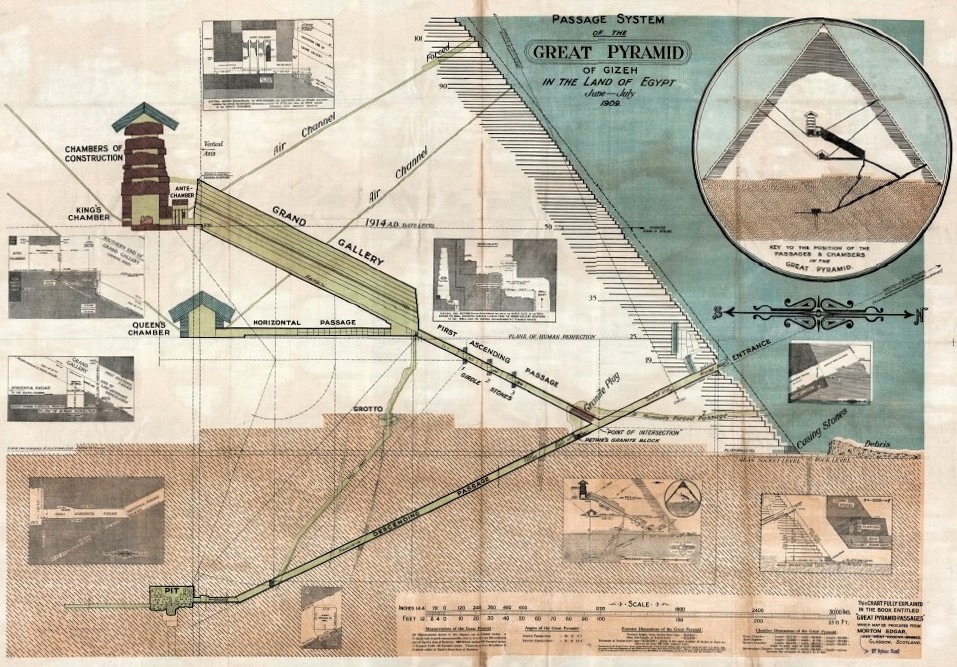
Researches like Moira Timms, suggest that the Great Pyramid of Giza may serve as a time capsule of encoded knowledge, aligning with celestial cycles and worldwide events. Some interpretations propose that the pyramid’s measurements correspond to historical timelines, predicting shifts in human consciousness and worldwide transformations. They believe that the pyramid’s internal passageways and measurements correspond to significant historical events, acting as a kind of stone calendar predicting worldwide shifts.
In 1925, Dave Davidson, a structural engineer, who studied the Great Pyramid for twenty-four years, claimed to have discovered a six thousand year system of prophetic dates encoded in its architecture, starting from 3999 BC and ending in 2001 AD. The dates formed a chronological time scale and were derived from mathematical calculations of the pyramid's geometry and astronomical alignments. Factors such as the the type of stone used, their layering, colour, and the directions of the passages were found to hold symbolic significance. Davidson’s calculations were based on the ratio of one pyramidal inch to one year, forming a mathematically deduced sequence of dates marking key events in history.
One of the most intriguing claims is that the pyramid’s timeline ends on September 17, 2001, just days after the destruction of the Twin Towers on September 11. This has led some theorists to speculate that the pyramid’s encoded chronology marked the beginning of a new era, one of worldwide transformation, upheaval, or awakening. Researchers who support this theory suggest that the ascending passage represents humanity’s spiritual journey, with key measurements aligning with major historical events. Some believe that the King’s Chamber marks the transition into a new age, and the final date, September 17, 2001, signifies the end of one cycle and the beginning of another.
However, John Van Auken, a researcher specialising in ancient Egyptian spirituality and Edgar Cayce's prophecies, suggests that the Great Pyramid's timeline does not end in 2001 but continues well into the future. In his book 2038: The Great Pyramid Timeline Prophecy, Van Auken proposes that the pyramid’s internal measurements correspond to key historical shifts, and that 2038 stands out as a pivotal date within this encoded timeline. He theorises that this period may mark an era of profound spiritual awakening or worldwide transformation, aligning with various prophetic traditions that foresee major shifts in consciousness. Van Auken connects this idea with Cayce’s predictions of an approaching age of enlightenment and the potential rebirth of ancient wisdom. While skeptics dismiss these interpretations as speculative, they remain a compelling part of the ongoing debate about whether the Great Pyramid serves as a mystical blueprint for humanity’s evolution.
This timeline theory aligns with other prophetic traditions, including Mayan predictions, Hopi prophecies, and Nostradamus’ writings, which all suggest that the early 21st century would be a time of great change. Some even link the pyramid’s timeline to biblical prophecies, arguing that it serves as a physical manifestation of divine foresight. The idea that the Great Pyramid encodes hidden messages about humanity’s future remains controversial, but it continues to captivate researchers and theorists alike.
Explore the Mysteries of Giza
Visiting the Giza Plateau is a must for anyone intrigued by the mysteries of the ancient world, particularly the iconic pyramids and the Sphinx. To make the most of your visit, planning ahead is crucial. Generally, the best time to visit is during the mild months of October to April, when temperatures are more pleasant for outdoor exploration. There are also fewer tourists during this time compared to the summer season, allowing for a more relaxed experience.
For an in-depth exploration of the plateau, consider joining organised tours by Viator that include knowledgeable guides. These tours not only provide insightful historical context but also allow visitors access to lesser-known areas. Both luxury tours and budget-friendly options are available, providing flexibility according to your preferences. Some reputable options include half-day tours for a quick overview and full-day excursions that cover nearby attractions, such as Luxor, Valley of the Kings, and Karnak. End your evening in style with a serene night cruise and dinner on the Nile.
Expedia offer a range of accommodation choices near the Giza Plateau from opulent hotels with views of the pyramids to economical guesthouses that cater to those on a tighter budget. The proximity of these accommodations ensures that you can maximize your time spent exploring the site. Notable hotels such as the magnificent Marriott Mena House offer a historic ambiance, while budget options like hostels and boutique hotels provide comfort without the hefty price tag.
To enrich your visit, consider adding attractions like the Mummification Museum, the Saqqara Pyramids, or the local Bazaar to your itinerary. These sites will enhance your experience and provide a broader context regarding the ancient Egyptian civilisation. With thoughtful planning, your journey to the Giza Plateau will undoubtedly be an unforgettable adventure into the heart of Egypt's ancient wonders.


Reflections on Egypt’s Mysteries
Egypt’s mysteries stretch far beyond its towering pyramids and hidden chambers. They weave through ancient prophecies, forgotten knowledge, and the enduring allure of the unknown. From theories of cosmic timelines to the spiritual significance of its structures, the Great Pyramid continues to spark curiosity and debate. Whether it holds a prophetic message, serves as a monument to human ingenuity, or simply stands as a silent witness to millennia of history, its legacy remains profound. As travellers walk its sacred grounds and seekers unravel its secrets, Egypt’s past continues to shape our understanding of civilisation, reminding us that some mysteries may never be fully revealed, but will always inspire those who dare to ask the questions.
Transform your cherished travel photos into beautiful, timeless art with Wanderlust Posters. A unique way to showcase your adventures!
May your travels enlighten your spirit and enrich your soul!

Author | Art Therapist | Mystic
Lisa Monk
This blog contains affiliate links which means I may earn a small commission, at no extra cost to you, if you make a purchase through these links.
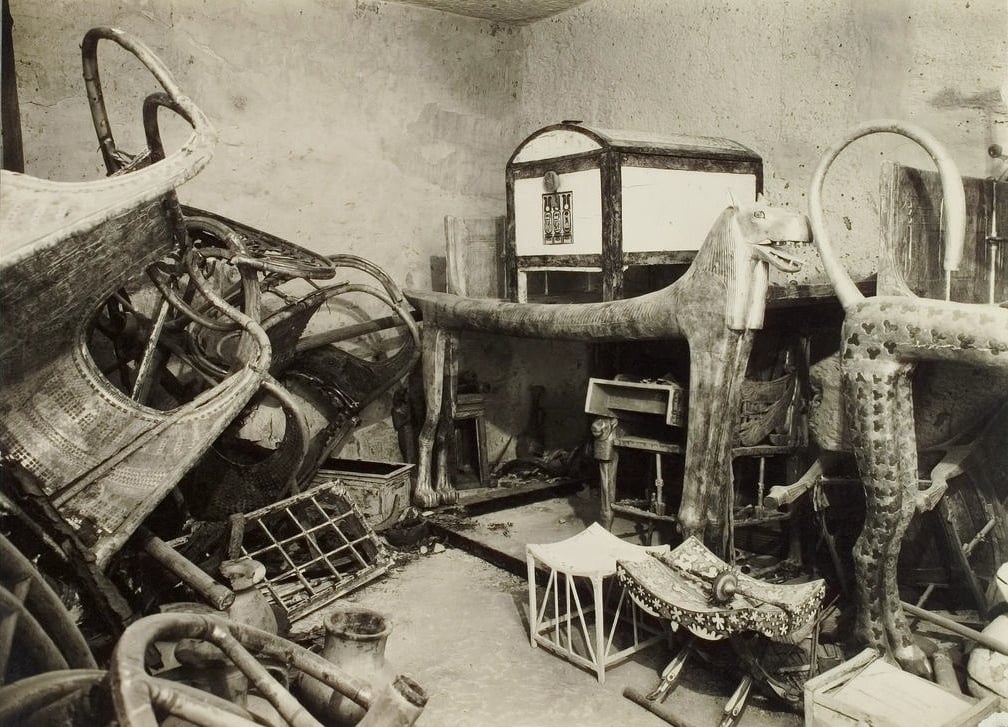
Tutankhamun's Tomb photographed by Harry Burton in 1922


Pyramids on the Giza Plateau, Cairo, Egypt
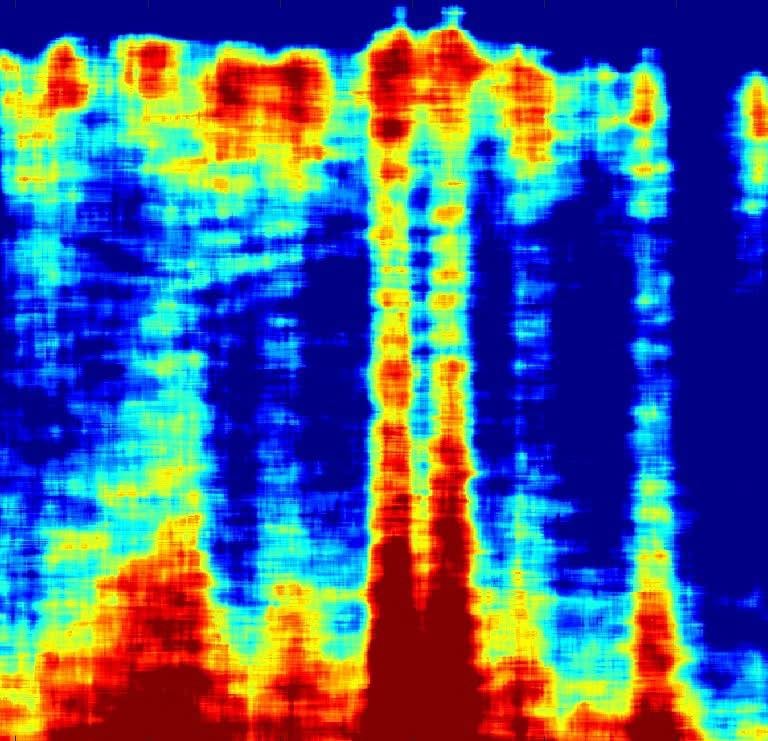
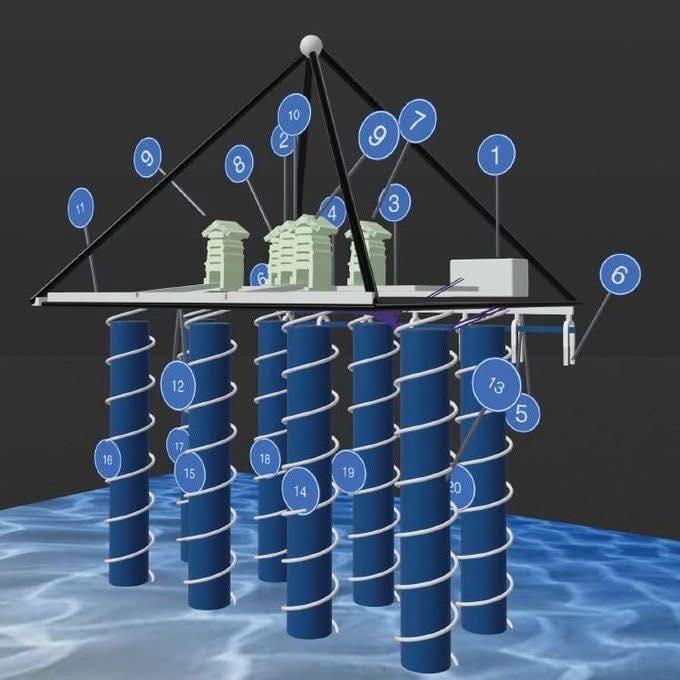
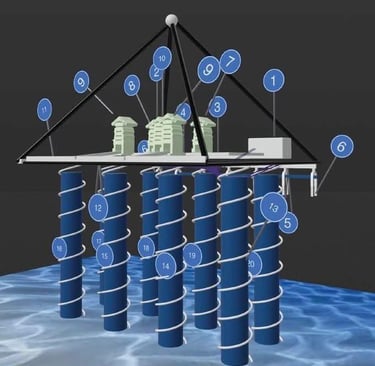
Khafre Project: Tomographic Image & 3D Model (OmniCore Tech)
The Great Sphinx, Giza Plateau, Egypt
Legendary Hall of Records, Egypt
Passage System of the Great Pyramid of Giza in the Land of Egypt June - July 1909, Morton Edgar
Luxor, Egypt
Wanderings
Copyright © Lisa Monk & Wyrd Path 2025 | All rights reserved.
Weavings
Support my Wyrd Path Wanderings with a donation.


Join the Wyrd Path Wanderers Community and unlock exclusive free gifts and more!