
Stonehenge: A Journey Through Time and Mystery
Embark on a journey to Stonehenge, where ancient mysteries and captivating folklore intertwine with the site's profound spiritual significance. Explore the legends that makes this sacred site a must-visit destination for travellers seeking a deeper connection to history and spirituality.
TRAVEL BLOG
Lisa Monk
9/28/20248 min read


In the 12th century, Geoffrey of Monmouth wrote Historia Regum Britanniae (The History of the Kings of Britain) and included a tale that attributed the construction of Stonehenge to Merlin. According to the tale, giants brought stones from Africa to Ireland and built a stone circle on Mount Killaraus, known as the Giant’s Ring or Giant’s Dance. The stones were thought to have magical and healing properties.
King Ambrosius Aurelianus wanted to construct a memorial for the Celitic Britons who were slain by the Anglo-Saxons and turned to Merlin for guidance. Merlin advised the king to transport the Giant’s Ring stone circle from Ireland to Salisbury. Uther Pendragon led the expedition to Ireland and won the battle against the Irish king Gillonanius, successfully retrieving the stones with Merlin’s magical assistance.
Another popular myth is that Stonehenge was built by giants, whose strength allowed them to lift and arrange the massive stones. Origin stories and oral traditions are filled with references to giants being an integral part of the founding of the British Isles. If you’re fascinated by the mysteries of megaliths and giants, I highly recommend The Giants of Stonehenge and Ancient Britain by Hugh Newman and Jim Viera, which delves into intriguing theories, myths, historical accounts, and archaeological sites about ancient giants and their connection to this iconic monument.
Visiting Stonehenge
For those looking to delve deeper into the history of Stonehenge, guided tours can be incredibly beneficial. Viator offers various options, including specialised tours that provide insights from knowledgeable guides, allowing you to understand the mysteries surrounding this iconic monument. Such tours can enrich your visit by providing context and fostering a deeper connection to the site.
Accommodation is another important consideration for your visit. Expedia features a range of lodging options nearby, catering to different budgets. Whether you are looking for a charming guesthouse, manor house or hotel experience, booking in advance can secure the best rates and locations. By planning your stay, you can fully immerse yourself in the atmosphere of this sacred site.
Visiting Stonehenge is more than just a travel destination. It can be a profound spiritual experience standing amongst these sacred stones steeped in mystery. Embrace the opportunity to connect with the ancient past, history, and folklore and journey inwards to discover what secrets and remembering these stones stir in your soul.
Transform your cherished travel photos into beautiful, timeless art with Wanderlust Posters. A unique way to showcase your adventures!
May your travels enlighten your spirit and enrich your soul!
The Devil bought the stones from a woman in Ireland, wrapped them up, and brought them to the Salisbury plain. One of the stones fell into the Avon, the rest were carried to the plain. The Devil then cried out, “No-one will ever find out how these stones came here!” A friar replied, “That’s what you think!”, whereupon the Devil threw one of the stones at him and struck him on the heel. The stone stuck in the ground and is still there.


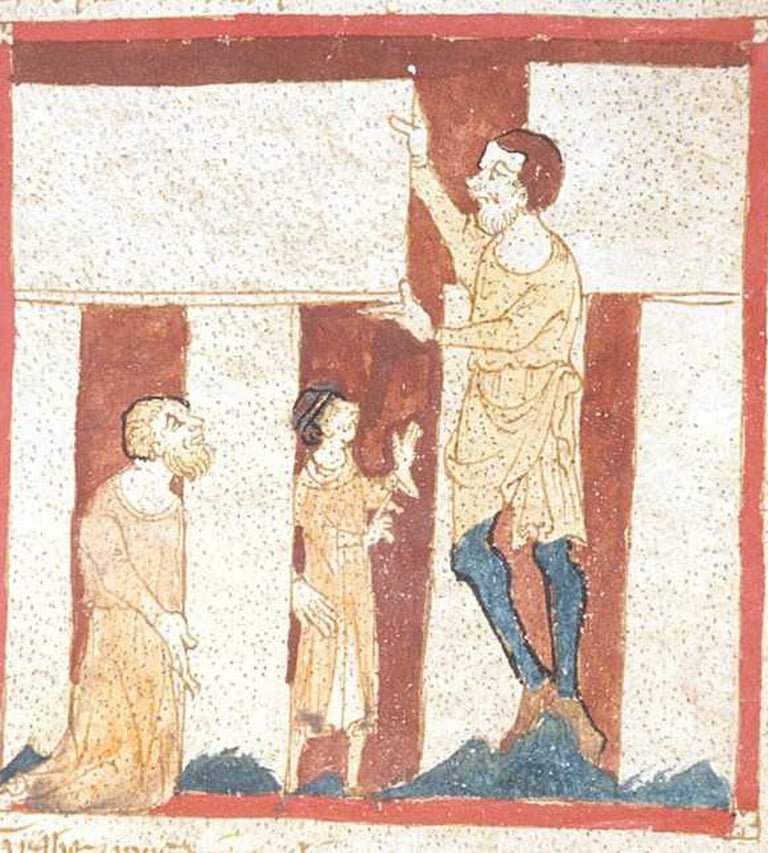
Merlin building Stonehenge (Roman de Brut)
Stonehenge and the Heel Stone


Stonehenge at sunset
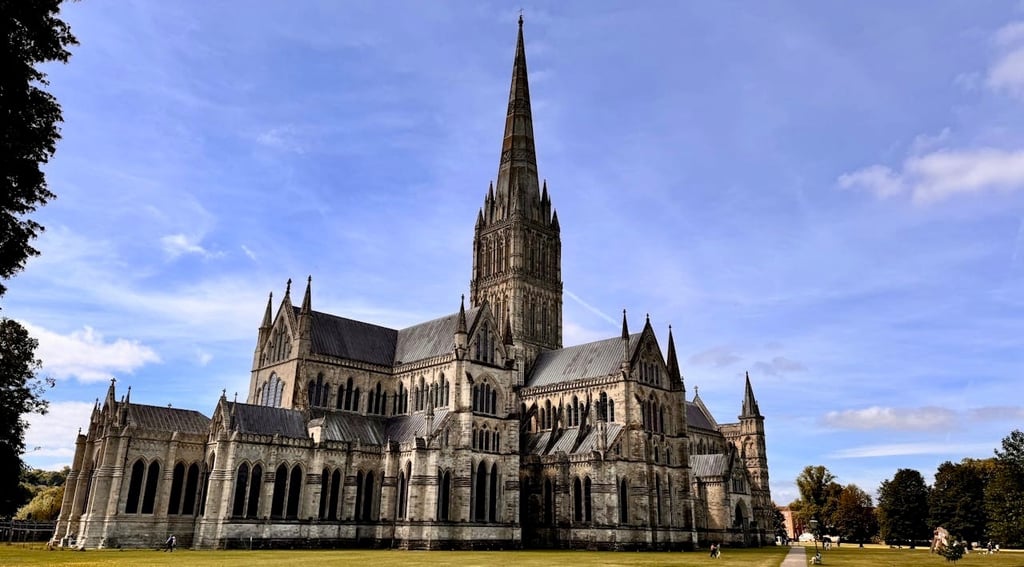
Salisbury Cathedral, Salisbury, Wiltshire, England

Lisa Monk
Author | Art Therapist | Mystic
The Journey to Stonehenge
For as long as I can remember I have been captivated by the mystery of Stonehenge and other stone circles around the world. What is it about a circle of stones that creates such an enchanting allure? Are they portals to other dimensions, communication devices, spell casting locations, or astrological calendars? Perhaps they are a combination of all these things or a concept that exceeds our current knowing.
In my teenage years I had a poster of Stonehenge on my wall and I would gaze at it dreaming of the day I would visit the sacred site. In my 30’s I worked two jobs to save up the money to travel to the UK and Europe to visit not only Stonehenge, but several other ancient sites that had captivated my interest since childhood. I ventured abroad as a solo traveller to make my dream come true!
My accommodation was in London, which I used as a base of exploration for the surrounding regions of England, and Expedia offers fantastic London deals. I only had three days on my coach tour in England, but looking back, if I had more time, I would consider staying in the beautiful historic town of Salisbury, renowned for its stunning medieval architecture and the iconic Salisbury Cathedral. The magnificence of the architecture of Salisbury Cathedral, and witnessing the original Magna Carta housed there, was breathtaking!
The drive from London to Stonehenge is nothing short of picturesque. Rolling hills enveloped in lush greenery frame the landscape, while quaint English villages are a highlight of the journey, each with its own unique charm. I found myself captivated by the scenery, as each turning of the road revealed a new glimpse of the countryside.
For those seeking convenience, Viator tours provide an exceptional solution. They offer well organised tours to reach Stonehenge and nearby sites, ensuring a stress free experience so you can focus on enjoying the adventure. Booking a guided tour not only simplifies transportation but also enriches the journey with expert insights.
First Impressions of Stonehenge
As I approached Stonehenge, the air was charged with an energy that seemed to transcend time itself. The initial sight of the monumental stones rising against the horizon was breathtaking. “Am I really here?”, I thought to myself. Each stone, carefully placed, silently bearing witness to a history that spans millennia. Standing before this ancient site, I felt an overwhelming sense of reverence, as though I was stepping into a sacred space where countless rituals had once taken place. My only vice was the hoard of tourists that detracted from the meditative serenity I had hoped for. If I have the chance to visit again I would go on an early morning tour, ahead of the crowds, to truly imbue the peace, tranquility, and enchantment of Stonehenge.
The imposing presence of the stones was both humbling and awe inspiring. Each towering pillar seemed to echo the whispers of the past, reminding me of the ancient Druids and Neolithic people who gathered here for ceremonies and celestial observations. The arrangement of the stones, forming a circular layout, suggested a profound understanding of astronomy and spirituality by those who crafted it. This deep connection to the cosmos is an integral part of Stonehenge's allure, compelling visitors to contemplate their place in the vast tapestry of history.
The surrounding landscape further enhanced the mystical ambiance of the site. Rolling hills and tranquil fields framed the monument, creating a picturesque backdrop that seemed untouched by time. The gentle breeze carried a sense of serenity, inviting moments of reflection. I was struck by how the natural beauty complimented the ancient stones, embodying the harmonious relationship that exists between nature and spirituality.
My Spiritual Experience
Visiting Stonehenge was not merely a trip to an ancient site; it was a profound encounter with something much larger than myself. Upon arrival, I was immediately enveloped by an enchanting atmosphere, a force that seemed to transcend time itself. I was disappointed that I was unable to enter the stone circle, as I know my spiritual experience would have been enhanced if I was allowed to do so. If you are visiting Stonehenge on a spiritual sabbatical, I would recommend taking a special access tour that allows you private access to enter the stone circle or attend one of the annual solstice celebrations.
I took a moment to find a tranquil space in the nearby field to engage in a meditation so I could fully absorb the frequencies of this ancient site. Closing my eyes, I focused on my breath, allowing the sounds of nature and the whispering winds to merge with my thoughts in the hopes of connecting with the sacred stones, the keeper of secrets.
Understanding the History of Stonehenge
Stonehenge, is a megalithic monument located on the Salisbury Plain, Wiltshire, England, and is a UNESCO World Heritage Site. The mainstream narrative suggests that it is estimated to be around 5,000 years old, which places its construction during the late Neolithic period. Researchers believe that the construction spanned several phases, beginning around 3100 BC and continuing until approximately 1600 BC.
This ancient site consists of an outer ring of sarsen standing stones, each measuring four metres in height and weighing approximately 25 tons, with an inner ring of smaller bluestones. The monument is aligned towards the sunrise on the Summer Solstice and sunset on the Winter Solstice. The ingenuity exhibited in its construction and the sheer scale of these stones have sparked considerable interest and numerous theories regarding its purpose and significance.
Scholars and archaeologists have proposed various hypotheses about the purpose of Stonehenge. One theory suggests that it served as a ceremonial site or a celestial calendar, guiding ancient folk in their agricultural and spiritual practices. The alignment of the stones with the solstices indicates that it could have played a role in rituals tied to the changing seasons. Furthermore, some researchers suggest that Stonehenge was a burial ground or a gathering place for various tribes.
Understanding the rich history of Stonehenge enhances the appreciation of this iconic landmark, fostering a deeper connection to the past for anyone who visits. To learn more about the history surrounding Stonehenge, you may like to read Stonehenge: A Brief History by Mike Parker Pearson, who draws on two decades of research, the results of recent excavations and cutting-edge scientific analyses to uncover many of the secrets that this prehistoric stone circle has kept for 5,000 years.
Stonehenge Folklore
The Heel Stone sits outside of the main circle and marks the location of the rising Sun on the horizon at the Summer Solstice when viewed from the centre of Stonehenge, casting a shadow at dawn that reaches the Altar Stone. The Heel Stone has been known by many names, including “Friar’s Heel”, and “Sun-stone”. The Brewer’s Dictionary of Phrase and Fable, by Ebenezer Cobram Brewer, relays a folk tale, dating back no further than the seventeenth century, about the origins of the Friar’s Heel stone.
The oldest known depiction of Stonehenge is in a manuscript titled Roman de Brut by Wace, located at the British Library, copied between 1338 to 1340. It is often thought that the illustration shows the wizard Merlin building Stonehenge with the help of a giant, but the placement of the image in the manuscript suggests that the giant may in fact be Merlin.
This blog contains affiliate links which means I may earn a small commission, at no extra cost to you, if you make a purchase through these links.
This blog contains affiliate links which means I may earn a small commission, at no extra cost to you, if you make a purchase through these links.
Wanderings
Copyright © Lisa Monk & Wyrd Path 2025 | All rights reserved.
Weavings
Support my Wyrd Path Wanderings with a donation.


Join the Wyrd Path Wanderers Community and unlock exclusive free gifts and more!